Pilot Guidelines
Introduction
This document provides a helpful template for organizations interested in running a TermLynx pilot. Although piloting a new technology can seem straightforward, convincing legal practitioners to adopt it can be challenging, even for exceptional products.
We have run numerous pilots in various organizations, including large and small law firms and in-house teams. We have refined our approach and recommend following this process to maximize your chances of running a successful pilot.
Pilot process
The pilot process is divided into five stages:
graph LR
    A[1. Security Vetting] --> B
    B[2. Proposal & NDA] --> C
    C[3. Preparation] --> D
    D[4. Pilot] --> E
    E[5. Rollout]
Keys to success
To improve your pilot’s chances of success, here are some key points to consider:
- Some pilot participants are not interested in new technology. Selecting pilot participants excited to become more productive using tools like TermLynx is critical.
- Make sure that the pilot participants are people that draft or review Microsoft Word legal agreements written in English.
- Onboarding pilot participants in a stressful period (like in the middle of a closing) can interfere with training. Delaying training for these pilot participants is generally a good idea.
- Complete prerequisite updates before the pilot and avoid unrelated add-in installations or major upgrades during the evaluation. Continue required security patching under your IT policies and retain the network access described in Requirements.
1. Security vetting
The first stage of the pilot project is security vetting. Before starting the pilot, you can assess if TermLynx meets your organization's security standards.
You can provide us with your organization's security form/questionnaire to assess if TermLynx meets your security standards. Our technical team will fill out the form and answer any follow-up questions.
We answer the most common questions in our Security FAQ and Data Security Policy.
2. Proposal & NDA
The second stage of the pilot project is the Proposal & NDA stage. In this stage, we will prepare a proposal outlining the details of the pilot project, including a timeline, deployment and training, and the number of pilot participants. We will design the proposal with you to meet your expectations and requirements.
You can provide us with your organization's standard NDA for review and signature to facilitate information sharing.
Before the pilot begins, confirm the applicable evaluation terms and order form with your legal team and TermLynx's sales team. The published license agreement includes piloting among its acceptance triggers and describes evaluation licensing under an applicable order form. Have counsel approve the arrangements before participants start using TermLynx.
3. Preparation
This stage involves the following steps:
- Gathering information about your organization's technology environment and conducting a test deployment
- Onboarding your Knowledge Management team, if applicable
- Selecting participants for the pilot project
graph LR
    A[3.1. Test Deployment] --> B
    B[3.2. Knowledge Management Onboarding] --> C
        style B stroke-width:2px,stroke-dasharray: 5 5
    C[3.3. Candidate Selection]
Dashed nodes indicate optional steps. If your organization has no Knowledge Management team, appoint a pilot lead to select participants and coordinate training.
3.1 Deployment information gathering and test deployment
We will gather information about your organization's technology environment to ensure that TermLynx can be deployed smoothly. We will complete this step with your organization's IT department.
We will conduct a test with IT to ensure that automated emails sent by TermLynx are delivered quickly to pilot participants. Receiving automated emails rapidly is vital for account creation and authentication.
We will conduct a smoke test of TermLynx with IT on a single machine to ensure the software works correctly in your organization's environment. The purpose of a smoke test is to identify any potential problems that could arise during deployment before the software or application is released to end users.
3.2 Knowledge Management onboarding (optional)
To ensure a smooth onboarding process, it is advisable to first onboard Knowledge Management lawyers. This will help Knowledge Management vet the software and support end users during the pilot.
Your IT team will deploy TermLynx to your Knowledge Management lawyers, who will then book a training session via email to learn how to use TermLynx.
Confirm training group size and availability in the pilot proposal.
3.3 Candidate selection
The Knowledge Management team or appointed pilot lead will select a pool of pilot participants for the pilot project.
Your IT department will then be mandated to deploy TermLynx to each pilot participant's computer.
The organizations that have been the most successful at integrating TermLynx have onboarded early-career lawyers first (1–5 years’ experience) and have a culture of openness to technology.
The best time for a pilot participant to be trained/onboarded is before they start drafting a legal agreement.
4. Pilot
This stage involves onboarding the pilot participants and collecting feedback.
graph LR
    A[4.1. Onboarding] --> B
    B[4.2. Feedback] --> C
    C[4.3. Analytics]
        style C stroke-width:2px,stroke-dasharray: 5 5
4.1 Onboarding
We will email each pilot participant selected by Knowledge Management or the appointed pilot lead in step 3.3 to book a training session once we have IT's confirmation that TermLynx is deployed on their machine.
Training resources are available on our website.
Confirm the training format, duration, group size, and scheduling with the TermLynx team in your pilot proposal.
4.2 Feedback
Each pilot participant must complete a survey to provide information regarding their experience using TermLynx.
The feedback will be used to improve the product and is usually requested a few weeks after the training.
4.3 Analytics (optional)
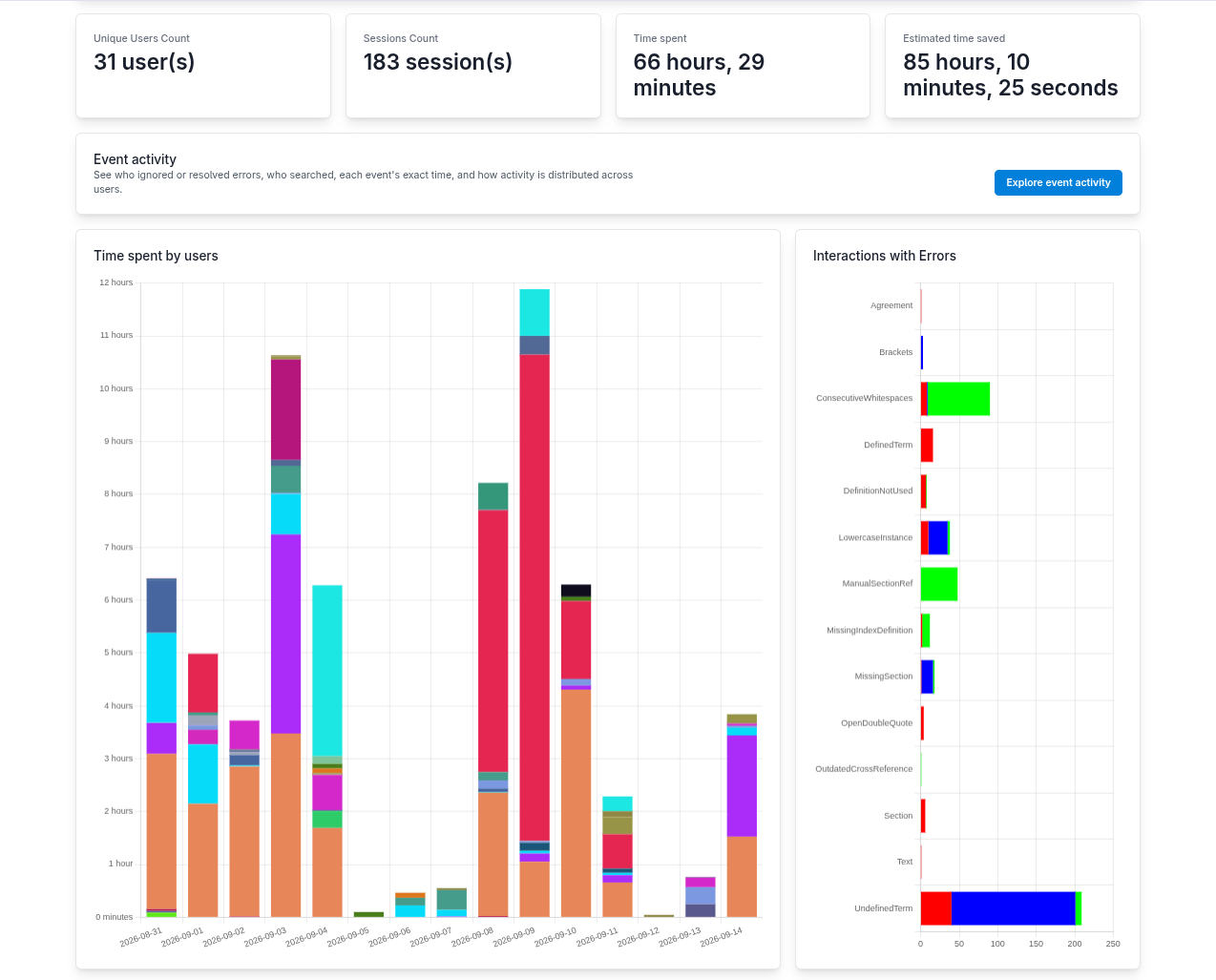
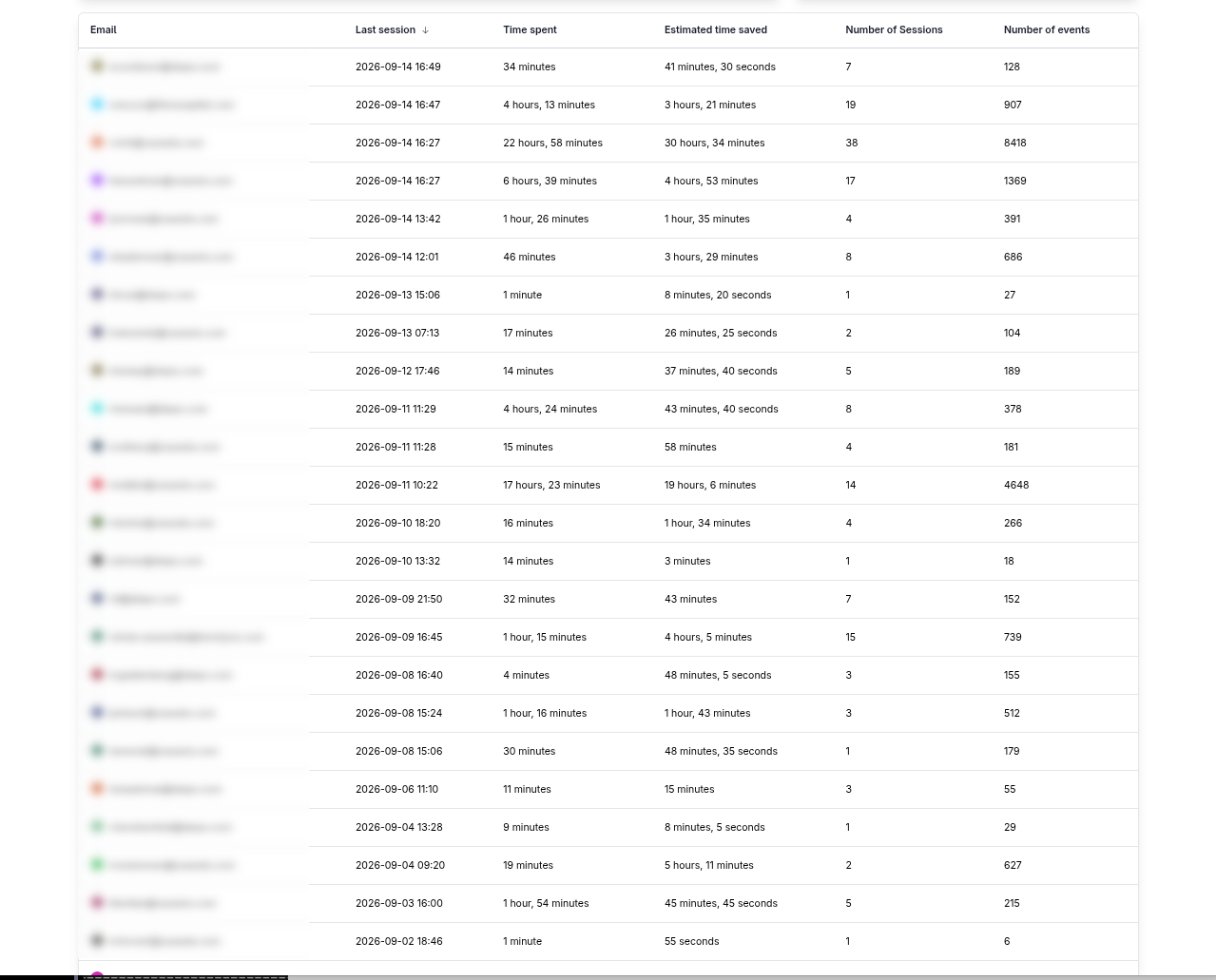
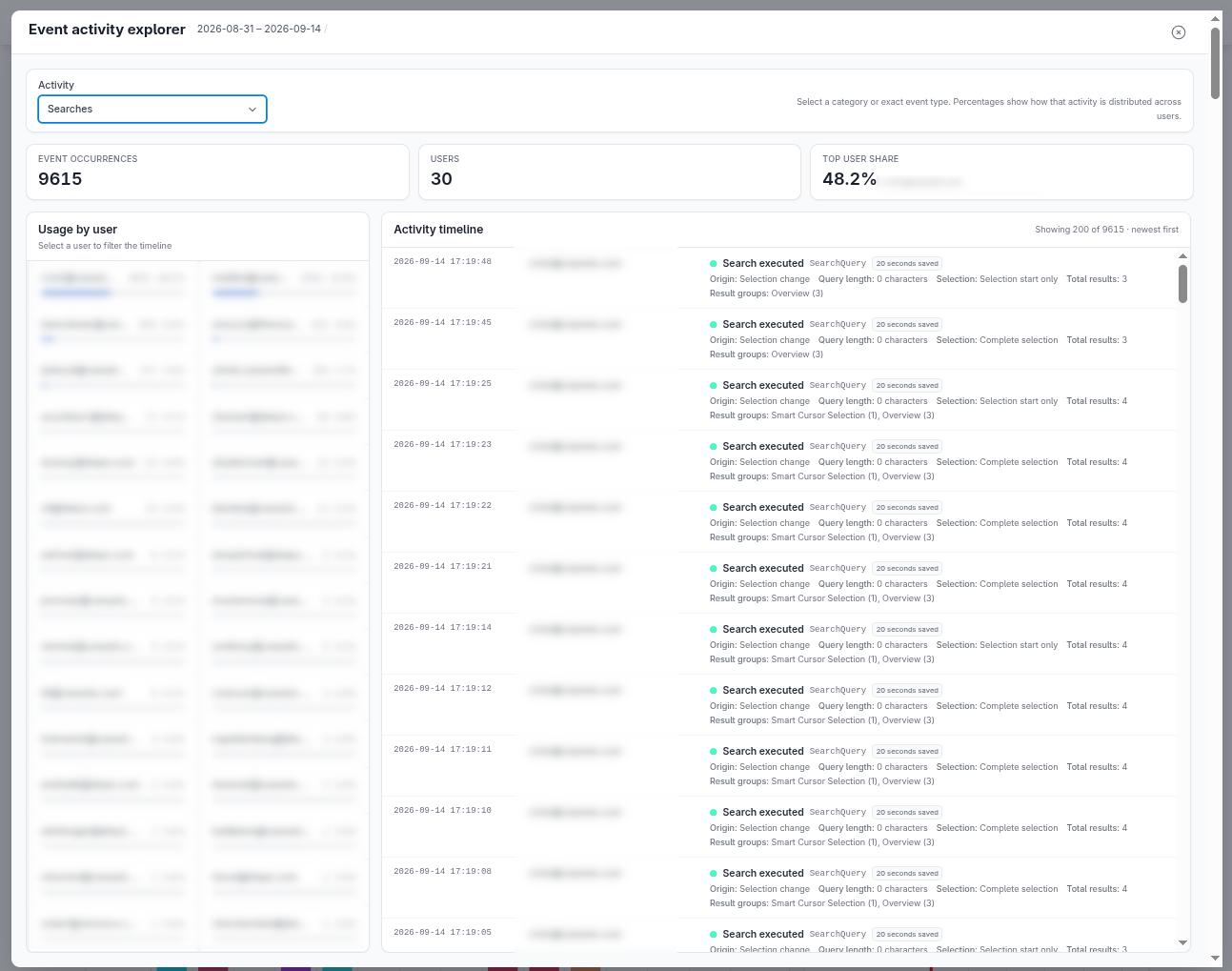
Discuss the availability and scope of usage reporting with the TermLynx team to support a data-driven purchase decision. Before sharing reports, agree on the review format (such as a supervised screen-sharing session), authorized recipients, and whether user-level data may be shown. These sample screenshots do not establish that a customer reporting login is available.
Time saved is an estimate, not a measured or guaranteed saving. Ask the team to explain the calculation methodology before using it to evaluate the pilot.
Screenshots of the analytics platform
This sample report illustrates usage analytics with user identifiers obscured. Obscuring identifiers in screenshots does not establish that the underlying activity data is anonymous. Confirm reporting availability, data handling, and access permissions with the analytics and privacy owners before the pilot.
Select an image to view the report at full size.
5. Rollout
If the pilot is successful and your organization is ready to roll out TermLynx globally or to a specific department, here are the steps to follow:
graph LR
    A[5.1. License Agreement] --> B
    B[5.2. Payment Arrangements] --> C
    C[5.3. Extended Deployment]
5.1 License agreement & order form
Finalize commercial licensing with your legal team and TermLynx's sales team under the applicable license agreement. The order form specifies seats, fees, payment terms, the subscription term, and other licensed features; it is not merely an authorization for automatic payments. This rollout step does not replace the evaluation terms confirmed before the pilot.
5.2 Payment arrangements
Confirm enterprise invoicing and payment arrangements with the TermLynx team under the agreed commercial terms. Stripe is used for individual licenses, not enterprise licenses.
5.3 Extended deployment
You can follow the steps to scale the use of TermLynx in your organization:
- Select end-users
- Deploy TermLynx to end-user machines